

Choosing between high-top and low-top Air Jordan shoes is one of the most widespread decisions facing sneakerheads in 2026. Both constructions hold decades of basketball heritage and street cred, yet they address distinctly different roles on and off the basketball court. High-top Jordans marked Michael Jordan’s career, providing the ankle stability that helped him rule the NBA through six championship-winning seasons. Low-top Jordans, meanwhile, developed into a casual-focused variant that prioritizes freedom of movement and hot-weather wearability. Grasping the actual differences between these two formats can protect you from regret and allow you to construct a more diverse sneaker lineup. In this comparison, we break down performance, wearability, style, and worth so you can make a smart decision on your next pair of Air Jordans.
When Peter Moore drew up the original Air Jordan 1 in 1985, high-top construction was the undisputed standard for basketball shoes. The tall collar hugged Michael Jordan’s ankle area and evolved into an legendary visual element that Nike marketed aggressively during the “Banned” marketing campaign. It was not until the Air Jordan 11 Low appeared in 1996 that Jordan Brand meaningfully explored the low-cut design for a flagship model. That release showed that collectors would embrace a trimmed-down version of an fan-favorite shoe, setting the stage for low-profile iterations of virtually every mainline Jordan. https://airjordan4.net/ By the mid-2000s, low-cut Jordans had grown into a summer staple, routinely depleting alongside their high-top counterparts. Presently in 2026, Jordan Brand drops approximately equal numbers of high-top and low-top releases each three months, indicating symmetrical consumer demand across both styles.
High-top Air Jordans rise 2 to 3 inches above the ankle, forming a snug collar that minimizes sideways rolling during aggressive cuts and jumps. Silhouettes like the Air Jordan 1 High and Air Jordan 12 employ cushioned collars combined with reinforced heel counters to stabilize the entire foot during game situations. According to a 2024 study published in the British Journal of Sports Medicine, high-top basketball shoes cut the occurrence of ankle injuries by approximately 28 percent compared to low-cut alternatives in non-professional ballers. Low-top Jordans, such as the Jordan 1 Low and Jordan 11 Low, sacrifice some of that ankle support in favor of reduced weight — often removing 50 to 80 grams per shoe. For casual ballers who play rec-league games once or twice a week, that lighter build translates into speedier acceleration and less fatigue over prolonged play. The trade-off is real, though: if you have a history of ankle injuries, a high-top model with proper lacing is still the wiser pick for any basketball play.
In everyday life, wearability concerns change significantly, and low-top Air Jordans frequently win out. The trimmed collar height eliminates the pressure point that high-top models can produce against the Achilles tendon during all-day wear. Many wearers note that Jordan Lows feel broken in after just two or three uses, while high-tops may need five to seven sessions before the collar padding fully molds. Cushioning tech stays consistent across both heights — the Air Jordan 1 features the same Air sole unit no matter the height, and the Jordan 11 preserves its full-length Air unit in both variants. Heat is another important factor: low-tops enable significantly more airflow around the ankle area, which makes them the ideal choice for warm seasons when foot heat is an issue. For the cooler seasons or full days of wear, the warmth delivered by a high-top collar can actually work in your favor, trapping warmth sealed around the ankle.
From a style standpoint, high-top Air Jordans attract interest and act as a standout element in any outfit. The Air Jordan 1 High, in editions like Chicago, Bred, and Royal, reliably sits among the most shot kicks on social media platforms, producing millions of hashtag mentions on Instagram alone. High-tops pair best with slim or tapered pants, sweatpants, and athletic shorts that enable the full silhouette to be seen — burying a high-top under loose jeans defeats its design intent. Jordan Lows, on the other hand, provide a more refined silhouette that blends naturally with a larger selection of looks, such as straight-cut jeans, chinos, and even smart-casual trousers. Fashion-forward sneakerheads in 2026 commonly deploy low-cut models as a crossover shoe that links streetwear and business-casual settings. The outfit range provides low-tops a modest leg up for sneakerheads who need a single pair to cover various settings throughout the week.
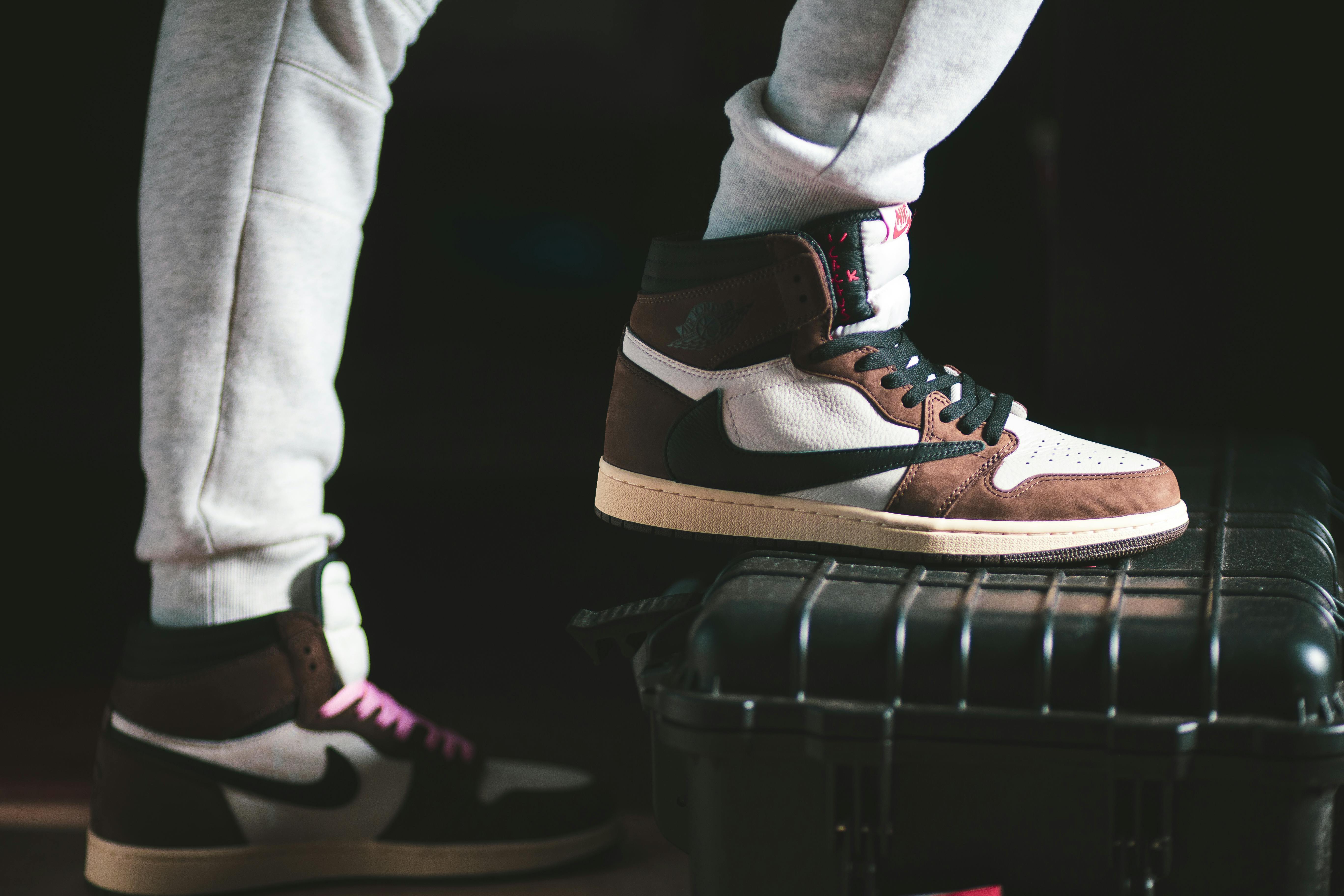
High-top Air Jordans typically offer more surface area, which lets creatives to incorporate multi-color blocking and diverse materials across the upper. This added canvas is why iconic releases like the Jordan 1 High “Union LA” and “Travis Scott” partnerships seem so aesthetically rich — there is just more canvas to employ. Low-cut models reduce that same design language into a tighter canvas, which can either seem sleeker or appear cluttered depending on the release. Leather, nubuck, suede, and patent leather all show up across both cuts, though luxury fabrics often appear more often in high-top special editions. In terms of wear resistance, the extra fabric on a high-top means slightly more coverage against scratches around the ankle area. Purchasers intent on keeping their Jordans pristine for years regularly choose high-tops for this pragmatic factor alone.
| Category | High-Top Air Jordans | Low-Top Air Jordans |
|---|---|---|
| Ankle Support | Excellent — wraps above ankle bone | Minimal — sits below ankle |
| Typical Weight | 400–500 g per shoe | 340–420 g per shoe |
| Ideal Season | Fall / Winter | Spring / Summer |
| Style Versatility | Streetwear, athletic | Street, casual, business-casual |
| Time to Break In | 5–7 wears | 2–3 wears |
| Resale Premium | Typically stronger | Moderate |
| Airflow | Fair | Good |
| Typical Retail Price | $170–$200 | $130–$170 |
In the resale market, high-top Air Jordans have over the years attracted steeper price premiums than their shorter versions. Pricing data from StockX indicates that the Air Jordan 1 High OG records a 40 to 60 percent markup over MSRP in desirable editions, while the Jordan 1 Low OG generally sees a 15 to 30 percent price increase. Exclusive high-tops, specifically those linked to collaborations with creatives like Virgil Abloh or Travis Scott, have achieved secondary market prices surpassing $2,000 in brand-new condition. Low-tops are starting to close that gap, however, as Jordan Brand focuses more intensely in dedicated low-profile drops targeting casual wearers. The Travis Scott x Air Jordan 1 Low Reverse Mocha, for instance, commanded significantly above $1,500 on secondary markets throughout 2023 and 2024. For investors targeting long-range returns, high-top models remain the more secure investment, but the low-top market is developing swiftly and should not be overlooked.
Your decision at the end of the day is determined by how and where you expect to wear your Air Jordans. If basketball performance is important to you — even casually — the support benefits of a high-top are undeniable, and the additional ankle support can avert ankle injuries that would bench you for weeks. For everyday wear across varied settings, a low-top Air Jordan delivers superior range, a lighter build, and an easier break-in period that fits right into a fast-paced routine. Value-minded shoppers will also appreciate that low-tops generally retail for $20 to $40 below their high-cut equivalents, extending your footwear budget more. Ideally, a balanced collection has at least one of each: a high-top for statement dressing and colder months, and a low-top for laid-back warm-weather rotation. Evaluate your present clothing collection, consider your activity level, and think about your climate before committing. Whichever cut you choose, you are purchasing a design built on over 40 years of design innovation from Jordan Brand.
The high-top versus low-top conversation has no universal winner because both cuts perform best in separate scenarios. High-top Air Jordans offer superior ankle stability, higher aftermarket values, and a bolder aesthetic impact that owns street style photos and sneaker conventions. Low-top Air Jordans offer a lighter build, faster break-in periods, broader wardrobe flexibility, and a more accessible cost for beginning buyers. In 2026, Jordan Brand goes on to evolve across both silhouettes, introducing new cushioning systems and eco-friendly materials that improve both variants year over year. The wisest approach is to judge each launch on its own merits rather than using a universal rule for one style over the other. Whether you lace up highs for a weekend convention or slip into lows for a warm-weather gathering, the Jumpman logo on your foot possesses the same iconic weight.
